
AI thought leadership content works when the thinking comes from your people and the typing comes from the machine. In a B2B service firm, that usually means a 25-minute interview with a partner, consultant or engineer about a real client problem, an AI draft built strictly from that transcript, and the expert tearing the draft apart before anything is published. You get steady output that doesn't sound like everyone else who typed "write a thought leadership post about logistics" into a chatbot.
The shortcut, prompting AI for opinion pieces about your industry, produces prose that's fluent, generic and instantly forgettable. Thought leadership is supposed to show what your firm knows that others don't. That's precisely the part AI can't provide.
How Generative AI Is Changing Business Publishing
Generative AI has made publishing almost free, and that's changed what stands out. A competent overview of any topic now takes four minutes to produce, so overviews no longer set anyone apart. What does stand out is original material: specific numbers, real client stories, opinions someone will defend, frameworks that came from doing the work. That's true in search, on LinkedIn and increasingly in AI answers.
There's a risk on top of the irrelevance. Google's spam policies name using generative AI tools to generate many pages without adding value for users as scaled content abuse. Volume without substance is a liability.
A Point of View AI Can't Copy
Before you build any system, apply one test to every piece: could a competitor put their logo on it without changing a word? If they could, it isn't thought leadership, however polished it reads. AI makes that failure very easy, because it drafts toward the average of everything already published.
Distinctive B2B content comes from a few places. Numbers only your firm has, like how long projects actually take, what clients ask most, which approach failed and why. A position you'll defend, such as "we don't recommend X for firms under 50 people, and here's why". Real situations with the names removed and the decisions left in. None of that comes out of a model. It comes from the people doing the work, which is why the system below starts with them.
A Content System That Uses AI Well
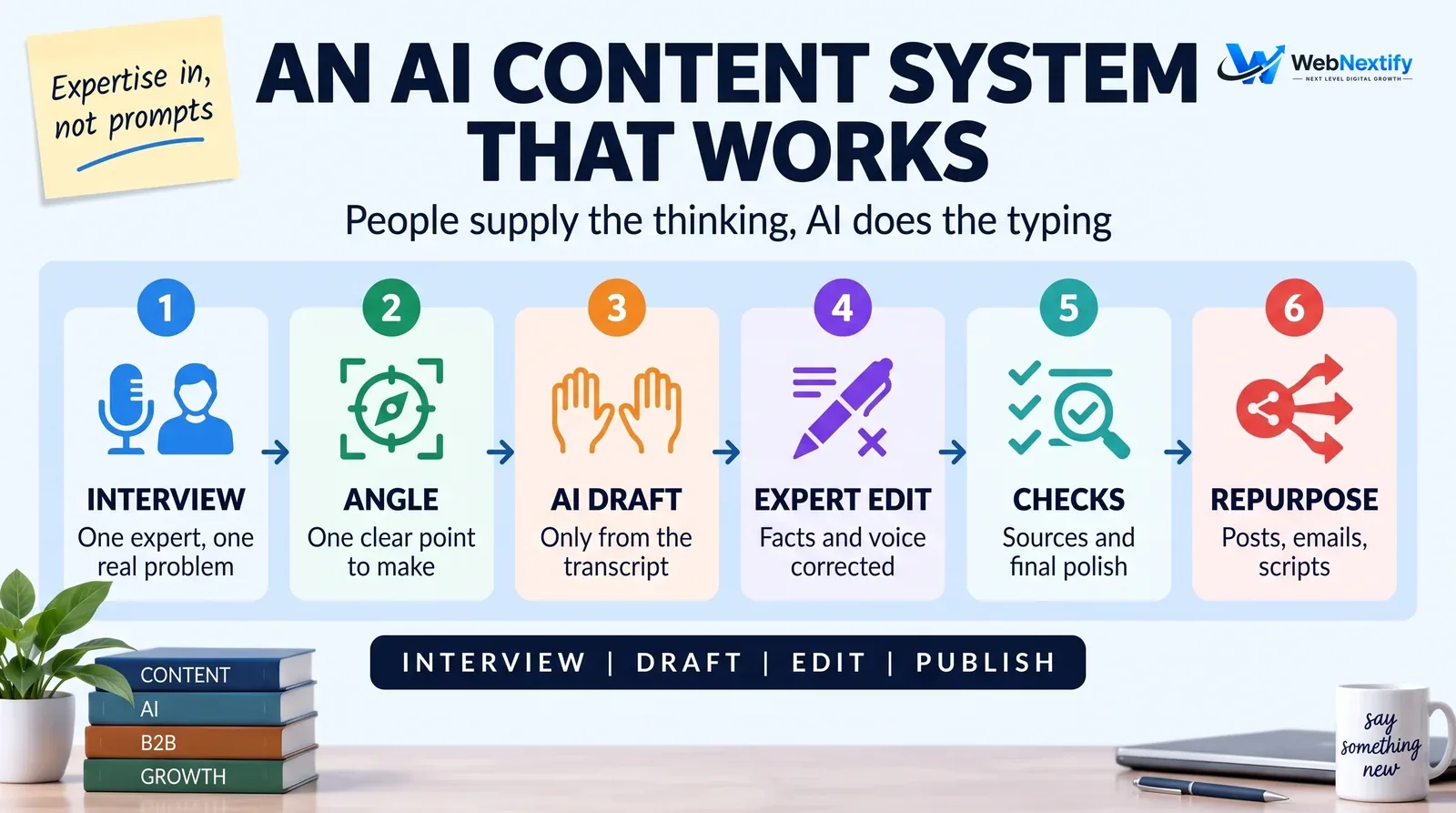
Start by capturing expertise. Book a 20 to 30 minute interview with one expert per piece. Ask about a recent client problem, what most people get wrong, what they'd do differently next time and what the numbers looked like. Record it and get a transcript.
Then shape the angle. Every piece makes one clear point. "Most mid-sized manufacturers over-insure their equipment" is an angle. "The importance of insurance" is a topic, and a dull one.
Now let AI draft. Give it the transcript, the angle, your style guide and a description of the reader, and ask for an outline and then a draft that uses only what's in the transcript. Tell it to flag anything it's unsure of rather than filling the gap.
The expert edit comes next, and it's non-negotiable. The expert fixes facts, adds the details only they know and cuts anything that doesn't sound like them. This is where the credibility comes from. After that an editor tightens the piece, checks every claim, adds sources and makes sure it reads like a person wrote it.
Last, repurpose. AI is genuinely good at turning one solid piece into a LinkedIn post, a newsletter section, a short video script and a sales follow-up email. The expertise has already been checked, so the risk at this stage is low.
Using AI for Content Analysis
AI earns its keep after publishing too. It can summarize which topics and formats led to engagement, leads or booked meetings, pull recurring questions out of sales call notes and support tickets, flag old articles with outdated facts, and compare your coverage with competitors' to find gaps.
The benefit is speed: it reads and summarizes far faster than any person, so you can review more often. Check its conclusions against the underlying numbers every time, because it will occasionally see a trend that isn't there.
Controlling Your Brand Narrative Across Generative AI Platforms
Buyers increasingly ask ChatGPT, Perplexity, Copilot or Gemini about firms in your field before they ever visit a website. You can't control those answers, but you can shape what they draw on.
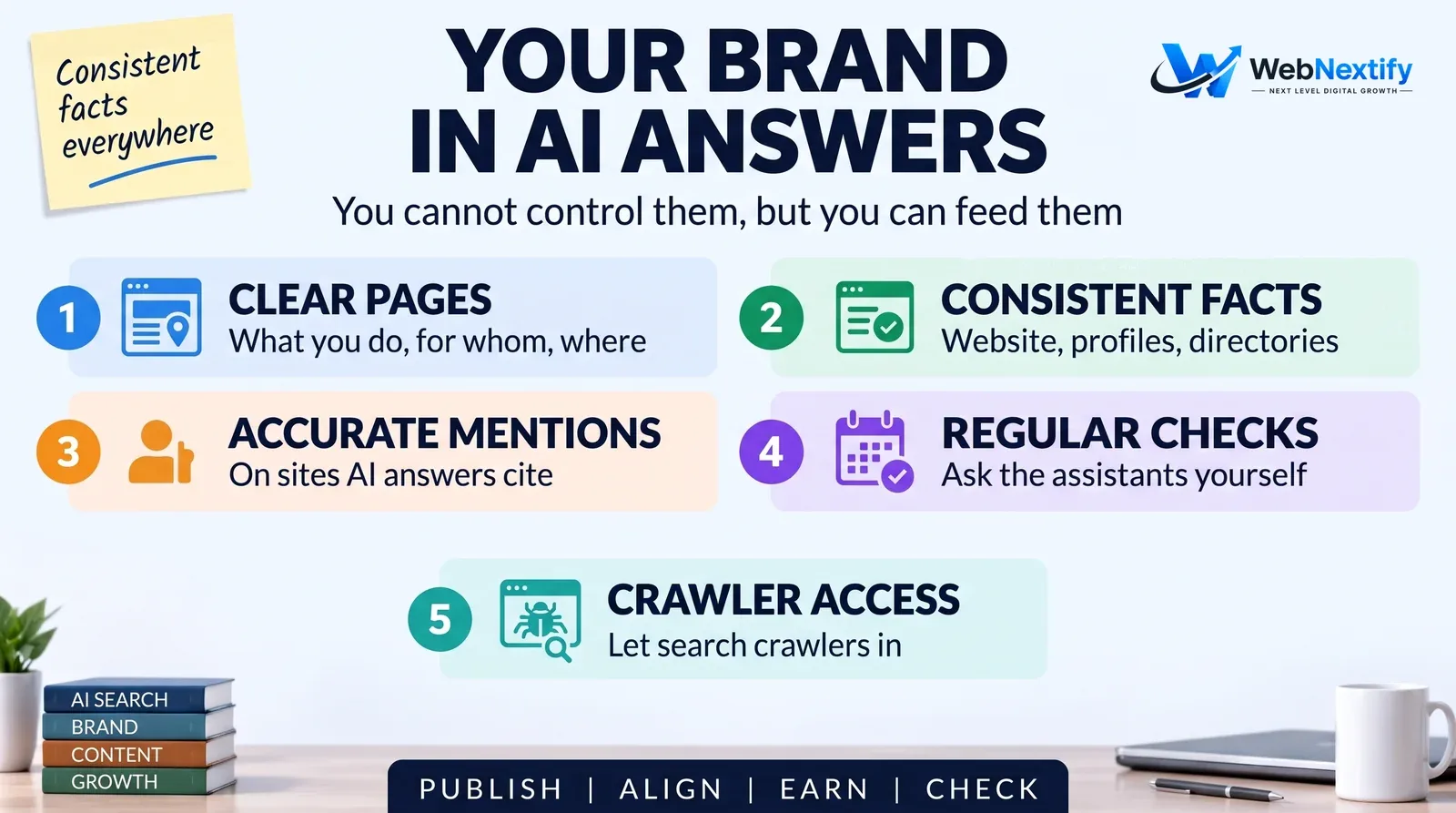
Publish clear, factual pages about what you do, for whom, where and how. Keep those facts identical everywhere: website, profiles, directories, press releases. Get mentioned accurately on the industry sites and publications those answers tend to cite. Every few months, ask the assistants about your firm yourself, and when they get something wrong, find and fix the public source behind it. And make sure search crawlers can actually reach your site.
The firms that show up accurately in AI answers are usually the ones with clear, consistent, specific information online.
Selling or Buying AI-Written Content on a Retainer
Plenty of agencies now sell AI-assisted content on a monthly retainer, to buyers ranging from professional services firms to software companies and trades. On either side of that deal, a few rules hold.
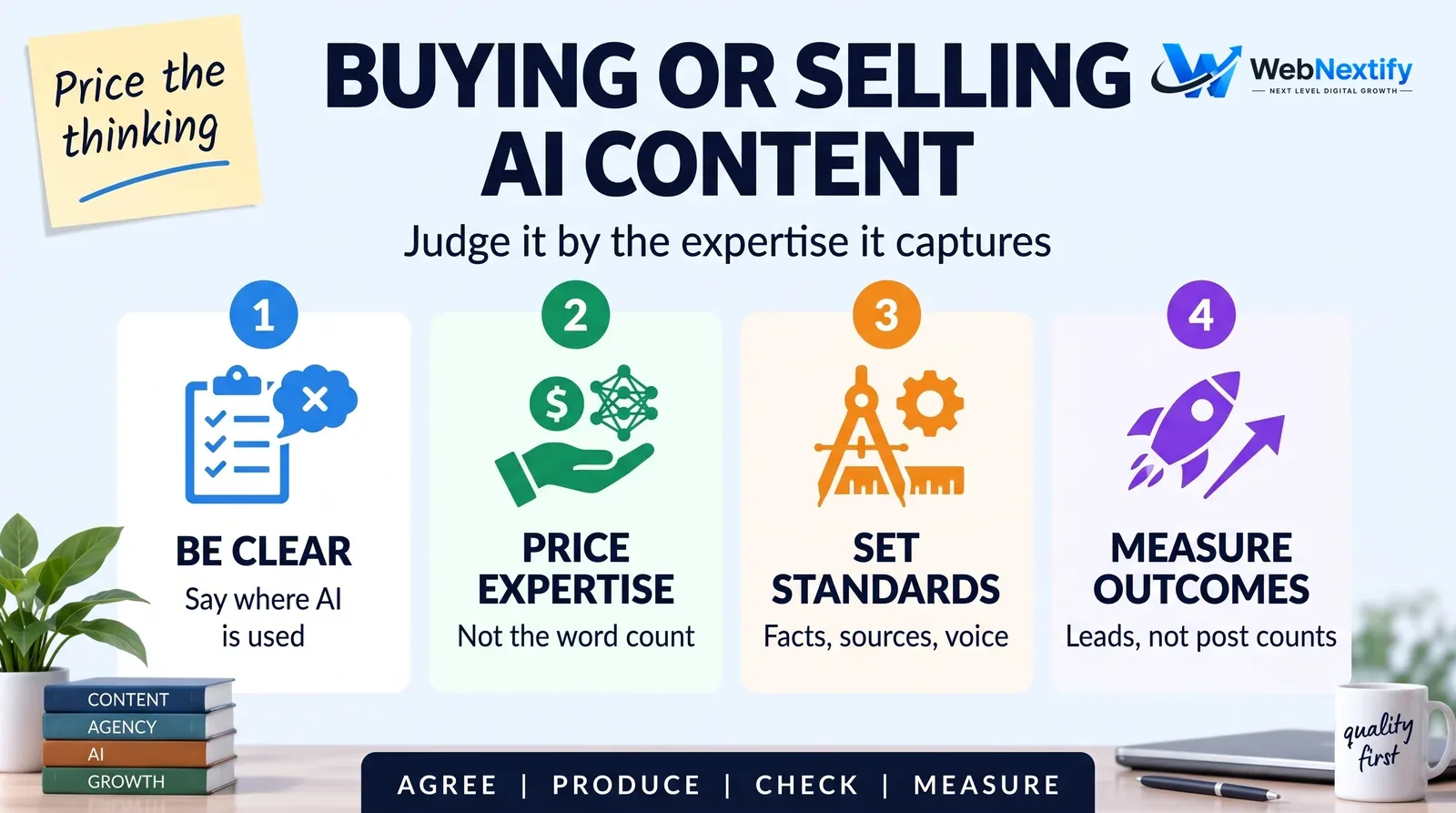
Be open about the process: clients should know AI is used and where human expertise and editing come in. Price the expertise, not the word count, because the interviews, editing and fact-checking are where the value sits. Set quality standards covering original input, fact-checking, sources and a voice check. And measure leads, meetings and search visibility rather than posts per month.
A retainer that delivers ten generic posts a month is easy to sell and very hard to renew.
Get Help Building the System
If you'd like help setting up an AI-assisted content workflow that keeps your experts at the center, see our SEO services and our AI chatbot and automation services. Our guide to AI workflow automation shows how to map the process first.
Frequently Asked Questions
Can AI write thought leadership content?
What does an AI thought leadership content system look like?
What are the benefits of AI content analysis?
How can I control my brand narrative in AI answers?
How do I make AI-assisted content sound different from competitors?
Is selling AI-written content to businesses a good model?
Does Google penalize AI-generated content?
Summary
Let experts supply the insight and AI supply the speed. Interview, draft, edit, check and repurpose. Keep your firm's facts consistent everywhere an AI might look, and judge any AI content service by the expertise it captures rather than the volume it ships.