SEO progress is the change in your search visibility, traffic and results against a recorded starting point, measured over months rather than days. The starting point is the part almost everyone skips. Take a baseline before the work begins, then compare the same numbers each month against the previous month and the same month last year.
Without a baseline, every monthly report turns into an argument about whether things are better. With one, the answer sits in a single table that anyone can read.
How to Find Your SEO Baseline
Record all of this before any SEO work starts, and save the exports somewhere nobody will overwrite them.
| Measure | Source | Why it matters |
|---|---|---|
| Organic clicks and impressions, last 12 months | Search Console | The core trend, with seasonality visible |
| Queries with impressions, and how many rank in the top 10 | Search Console | Breadth of visibility |
| Top landing pages from organic search | Search Console and GA4 | Which pages carry the site |
| Organic leads, sales or key events | GA4 | Business results |
| Indexed vs not indexed pages | Search Console Pages report | Technical health |
| Core Web Vitals status | Search Console | Page experience starting point |
| Rankings for a fixed keyword list | Rank tracker or Search Console | Specific targets |
| Business Profile actions, if local | Business Profile performance | Local results |
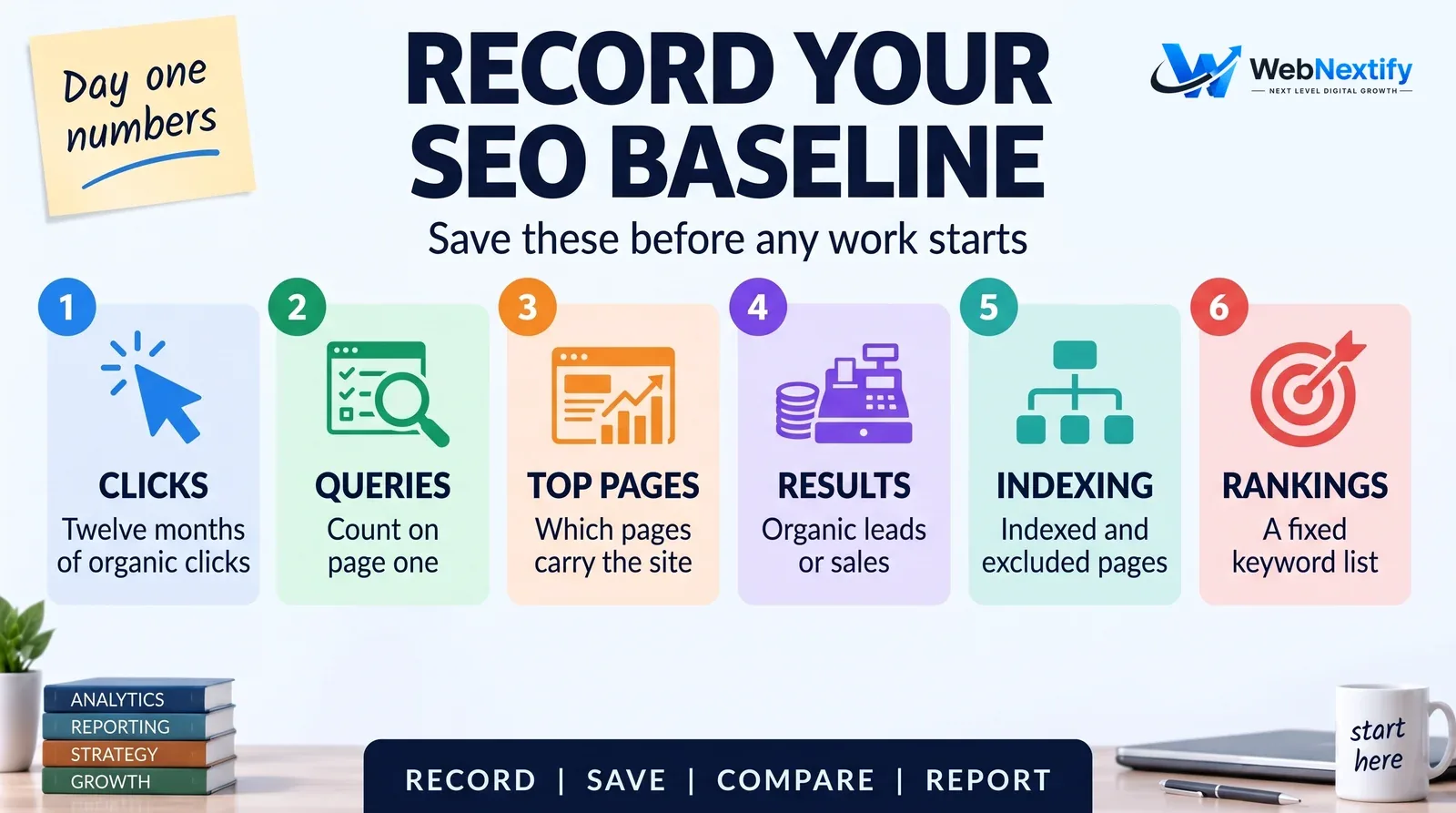
A baseline ranking check is just that last ranking row: a dated record of where your priority keywords sit, from a set location and device, before anything changes. Later checks have to use exactly the same settings, or the comparison means nothing.
SEO KPI Reporting: What to Track Each Month
Pick a handful of KPIs that connect to how the business makes money. Organic clicks belong on the list, split into branded and non-branded. So do non-branded impressions, which are usually the first number to move when visibility grows, and the count of queries ranking in the top 10. Add organic leads, sales or bookings, the conversion rate from organic landing pages, and progress on your priority pages or keyword groups. If AI search matters to you, add visits from ChatGPT, Perplexity and similar assistants as GA4 referral sources, treated as a trend because they undercount.
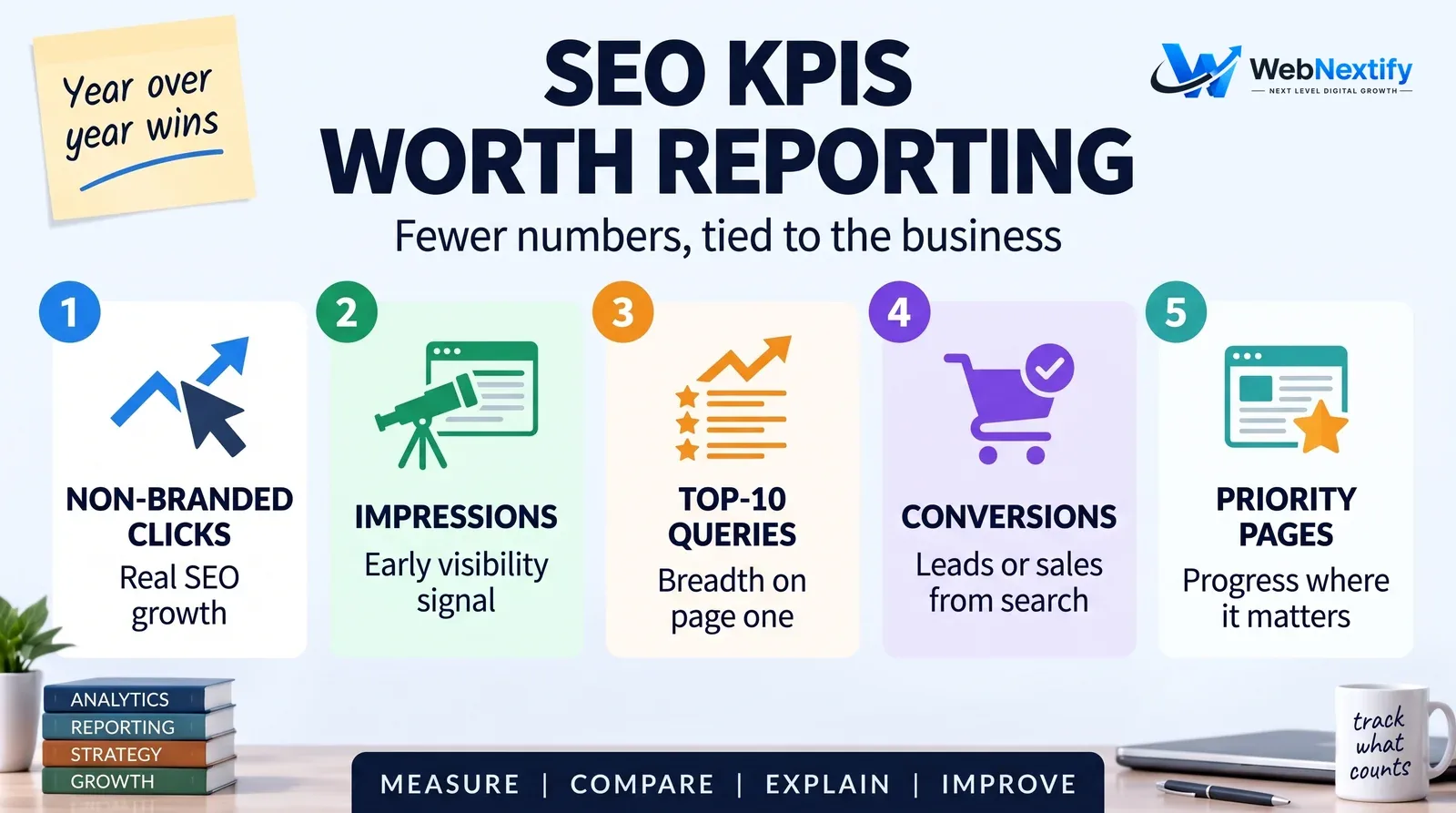
Report each against last month and the same month last year. Non-branded clicks and organic conversions are the two most owners actually care about. Branded searches mostly measure how well known you are, not whether the SEO work is doing anything.
How Do I Know My SEO Is Working?
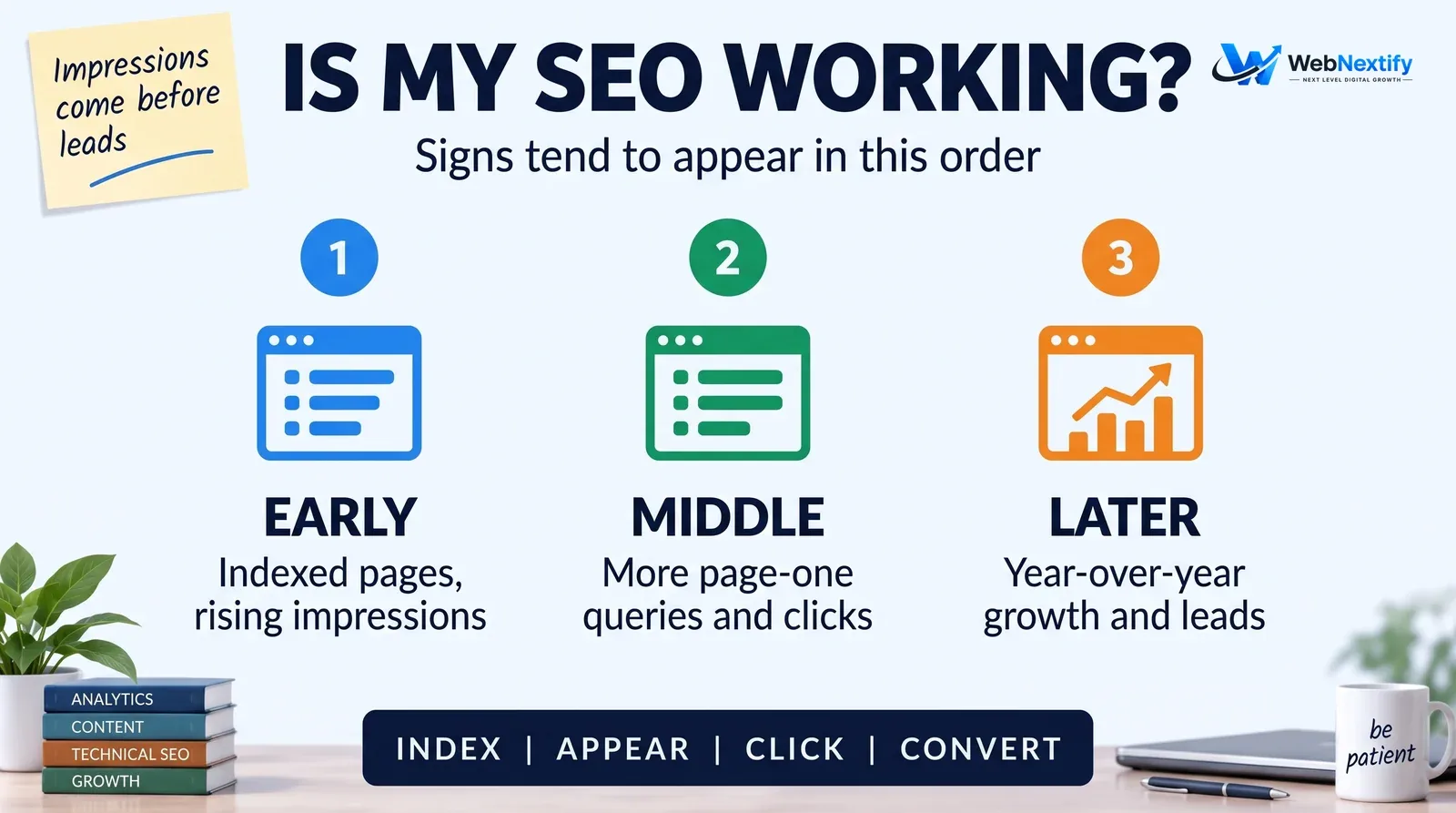
SEO results arrive in a sequence, and knowing the order lets you judge progress long before the leads show up.
The early signs come within weeks to a few months. Pages you fixed get indexed and stay indexed. Impressions rise for your target queries, usually before clicks do. New pages start appearing in search, often low at first, and crawl errors drop.
Then the middle signs. More queries climb onto page one. Clicks rise on the pages you improved, click-through rate picks up after title changes, and the right pages start ranking for the right searches.
The late signs take several months or longer, and they're the ones that pay. Non-branded organic traffic grows year over year. Organic leads and sales rise. Visibility holds steady through Google's updates instead of swinging with each one.
How long each stage takes depends on competition, the site's history and how much work goes in. Google itself says some changes take effect in a few hours and others could take several months.
When to Worry That It Isn't Working
Patience has limits. After about three months of steady work, the pages you changed should be indexed and impressions for target queries should be moving. Six months in, non-branded clicks should be up on last year. If neither is happening while competitors keep gaining, the question isn't whether SEO works. It's whether the right work is happening on the right pages.
The baseline already holds most of the answer. Are the priority pages indexed and chosen as canonical? Do they match what the top results offer? Does the work log show real changes to those pages, or mostly busy activity elsewhere? Honest answers to those three usually explain a stall.
How to Benchmark SEO Performance Fairly
Benchmarks only help when they compare like with like. Your own year-over-year trend is the most reliable benchmark there is, because it cancels out seasonality. Competitor benchmarks from SEO benchmarking tools are estimates, and the tools disagree with each other, so compare the direction of their trends rather than the absolute figures. And compare page groups with page groups: service pages against service pages, blog posts against blog posts.
For website performance benchmarks like speed, use Google's Core Web Vitals thresholds instead of tool scores. That means a largest contentful paint within 2.5 seconds, interaction to next paint of 200 milliseconds or less, and cumulative layout shift of 0.1 or less, at the 75th percentile.
Common Mistakes When Measuring SEO Progress
Impatience is the big one. Most SEO work needs months, not weeks, and pulling the plug at week six throws away the part that was about to pay off.
Comparing month to month in isolation comes a close second. A summer dip or a December spike can look like failure or triumph when it's just the calendar. Counting branded traffic as an SEO win flatters the numbers, and so do rankings reported without clicks or leads beside them. And keep a log of work done and site changes. Without it, you can't tie any result to a cause.
Get Help Measuring SEO
If you'd like a baseline recorded properly and monthly KPI reporting that shows real progress, see our SEO services. Our guides to SEO analytics reporting and monthly SEO reports go deeper into report structure.
Frequently Asked Questions
How do I know if my SEO is working?
What is an SEO baseline?
What is a baseline ranking check?
Which SEO KPIs should I report?
How long does SEO take to show progress?
When should I worry that my SEO isn't working?
What are the best SEO benchmarking tools?
Summary
Record a baseline before you start and report a few KPIs tied to business results, compared year over year. Then look for progress in the right order: indexing and impressions first, clicks next, leads after that.